Originally reported November 13, 2026, at 19:30 UTC+8.
U.S. President Donald Trump submitted four nominations to the Senate on November 12, 2026, to fill seats at the Securities and Exchange Commission (SEC) and Commodity Futures Trading Commission (CFTC). Each agency has one Republican and one Democratic nominee. All four require Senate confirmation; the nominations do not establish a new crypto policy.
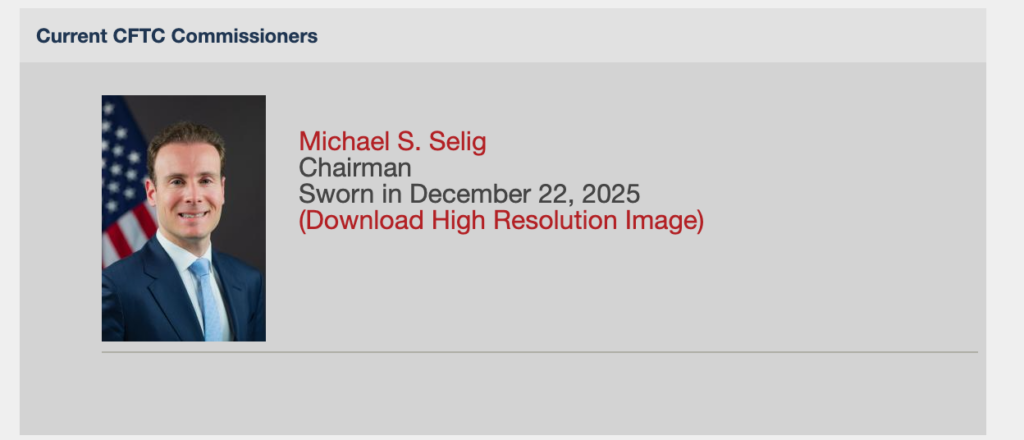
The vacancies are substantial. After Hester Peirce left the SEC in October 2026, its remaining commissioners were Chair Paul Atkins and Mark Uyeda. The CFTC had only its chair, Michael Selig. If all four nominees are confirmed, the SEC would have four commissioners and the CFTC three. Each agency has five seats, with no more than three held by one party.
CFTC nominees and pending legislation
Nathan Anonick, a legislative adviser to Senate Agriculture Committee Chair John Boozman, has worked on cryptocurrency, futures and derivatives issues. According to The Block, he was among the committee’s principal negotiators on provisions of the CLARITY Act. A legislative text advanced by the committee in January 2026 proposed CFTC oversight of digital-commodity spot intermediaries, alongside registration, customer-fund segregation and conflict-of-interest requirements. The bill failed to clear a procedural Senate vote in September 2026; those proposed requirements were not enacted by the nominations.
Matthew Rowland is a CFTC lawyer detailed to the Agriculture Committee who previously worked on enforcement. The Block reported that he worked on the CLARITY Act and on the committee’s 2024 crypto legislation. If confirmed, Anonick and Rowland would join Selig in considering matters within the CFTC’s existing remit, including an event-contract rule proposal issued in June 2026 that discusses contracts tied to activities such as sporting events.

SEC nominees and DeFi oversight
Kristin Johnson, a former CFTC commissioner and now a professor at George Washington University Law School, publicly supported the CFTC’s 2023 enforcement actions against DeFi operators Opyn, Deridex and ZeroEx. In her statement, she urged scrutiny of whether operators effectively act as intermediaries when important clearing or settlement functions are concentrated off-chain. She also addressed customer identification, asset segregation, conflicts of interest and liquidity reserves, while calling for clearer rules. Her past CFTC position does not establish how she would decide issues under the SEC’s securities-law authority.
The other SEC nominee is identified in the original report only as Levine. In February 2025, the SEC announced Levine as deputy chief of staff to then-acting Chair Uyeda, who had established a crypto task force led by Peirce the previous month. Levine later became general counsel and senior adviser at the White House Council of Economic Advisers and has been nominated for Peirce’s former seat.
The nominees’ work bears on questions that can cross agency boundaries, including how digital assets are classified and how trading platforms are regulated. Their positions as commissioners, however, depend on Senate confirmation. The original report also noted a limited confirmation window before a change in the Senate majority expected in January 2027; the Senate’s hearing and voting schedule remained to be seen.