
Originally reported November 10, 2026, at 12:52 p.m. UTC+8.
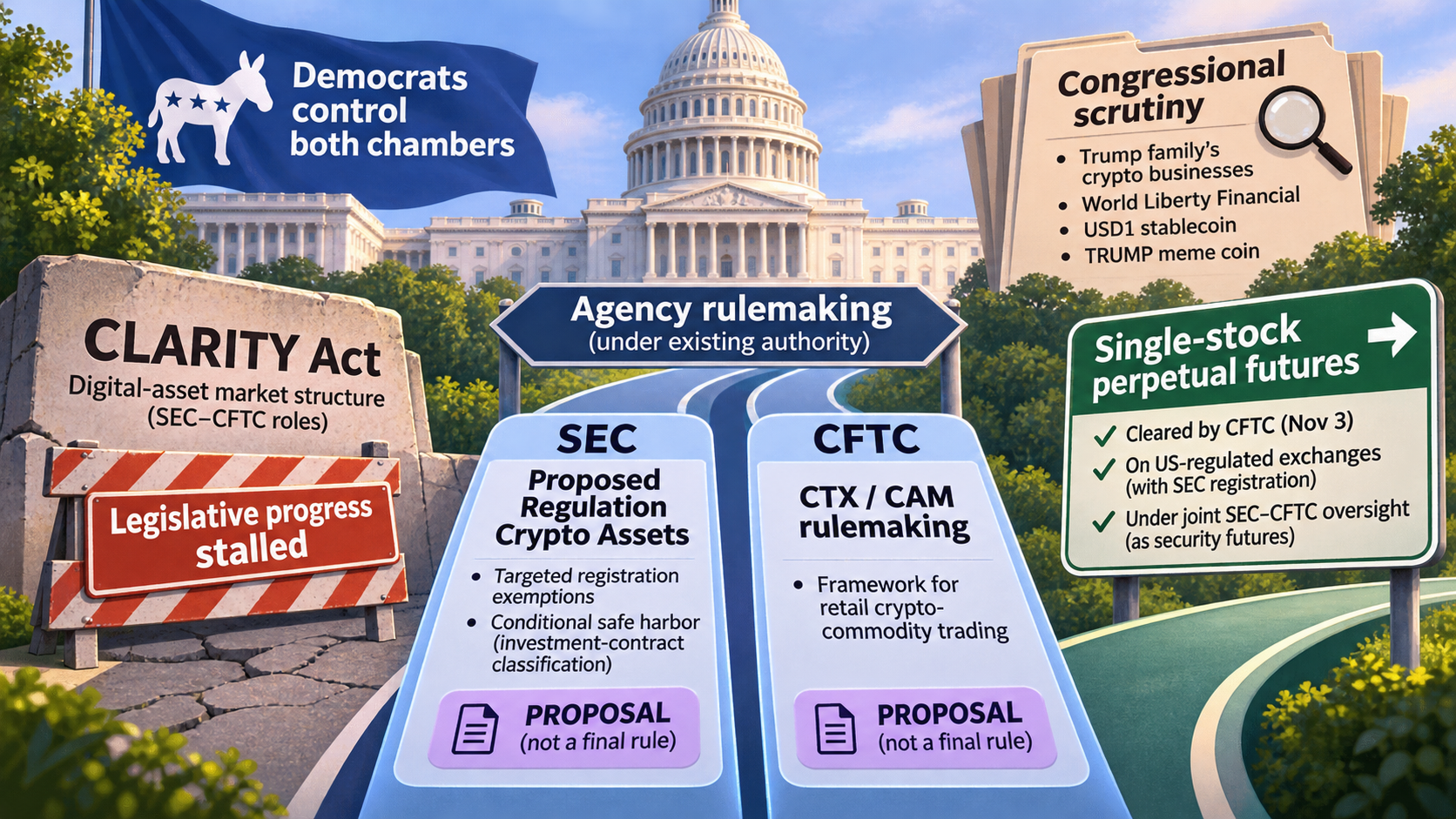
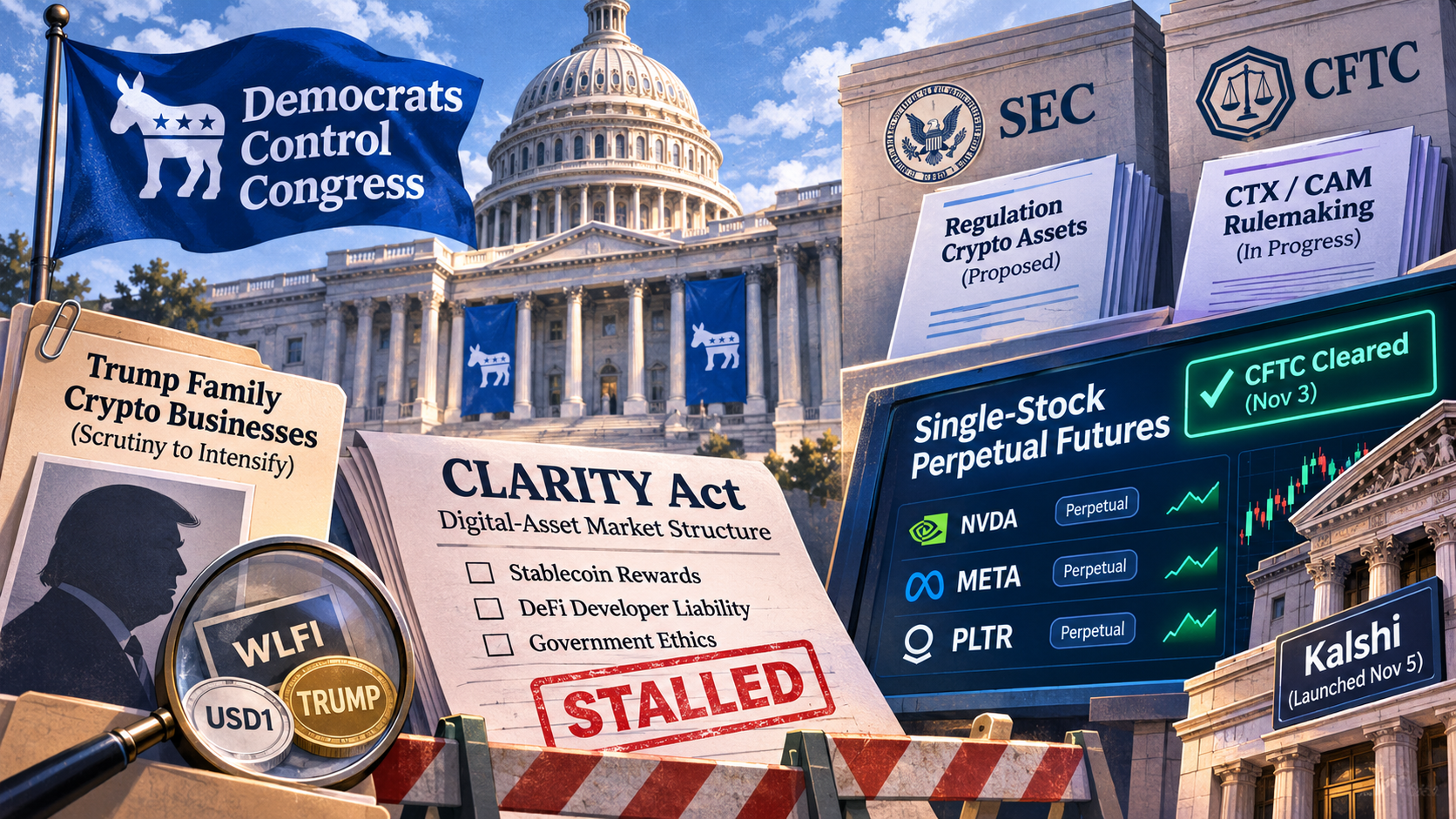
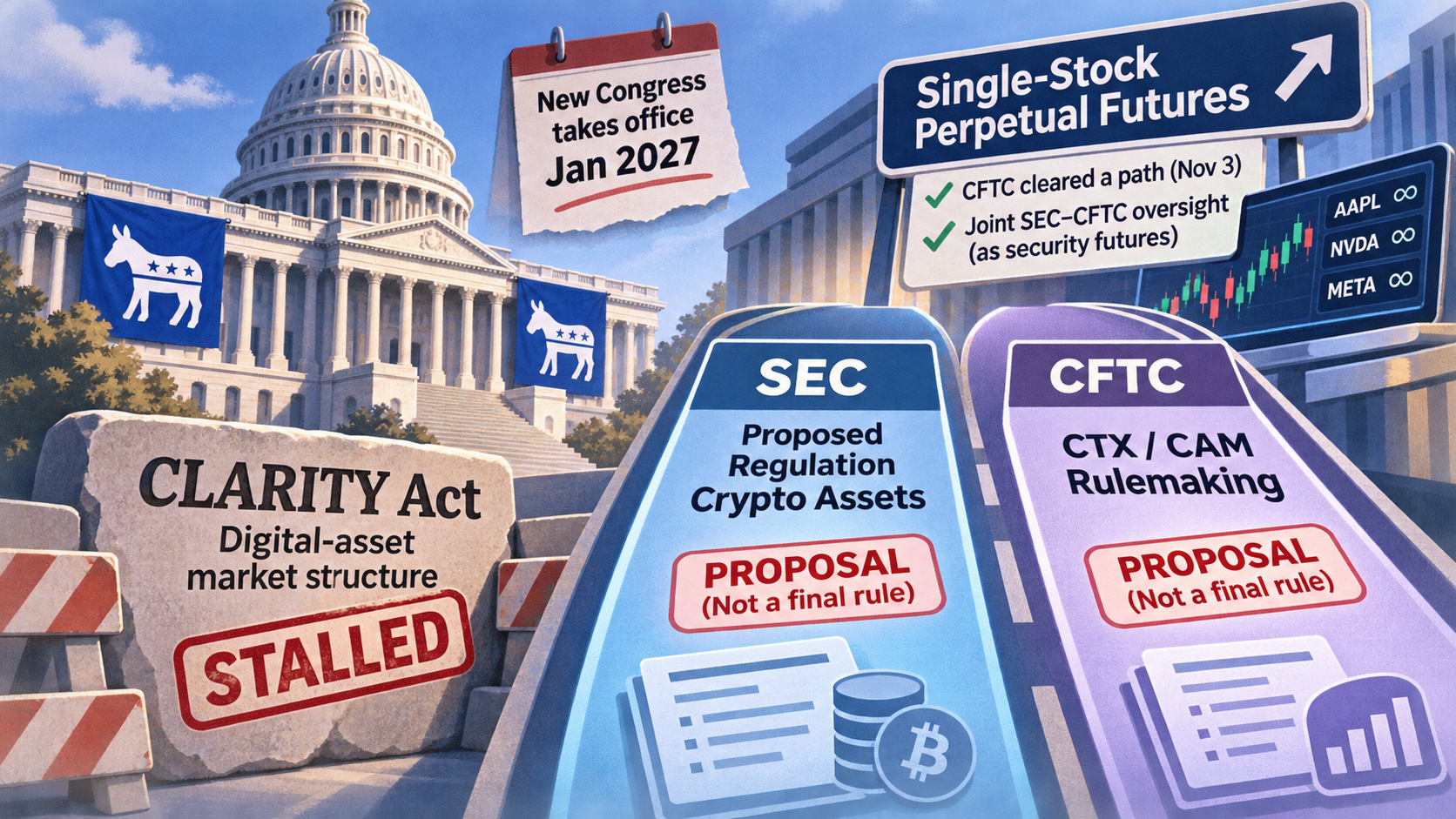
Democrats secured control of both chambers of the US Congress in the November 3 midterm elections, according to a Four Pillars weekly report translated by TechFlow. The new Congress is due to take office in January 2027. The report expects the result to make comprehensive crypto legislation harder to advance, while the Securities and Exchange Commission (SEC) and Commodity Futures Trading Commission (CFTC) continue work under their existing authority.

Market-structure legislation faces a steeper path
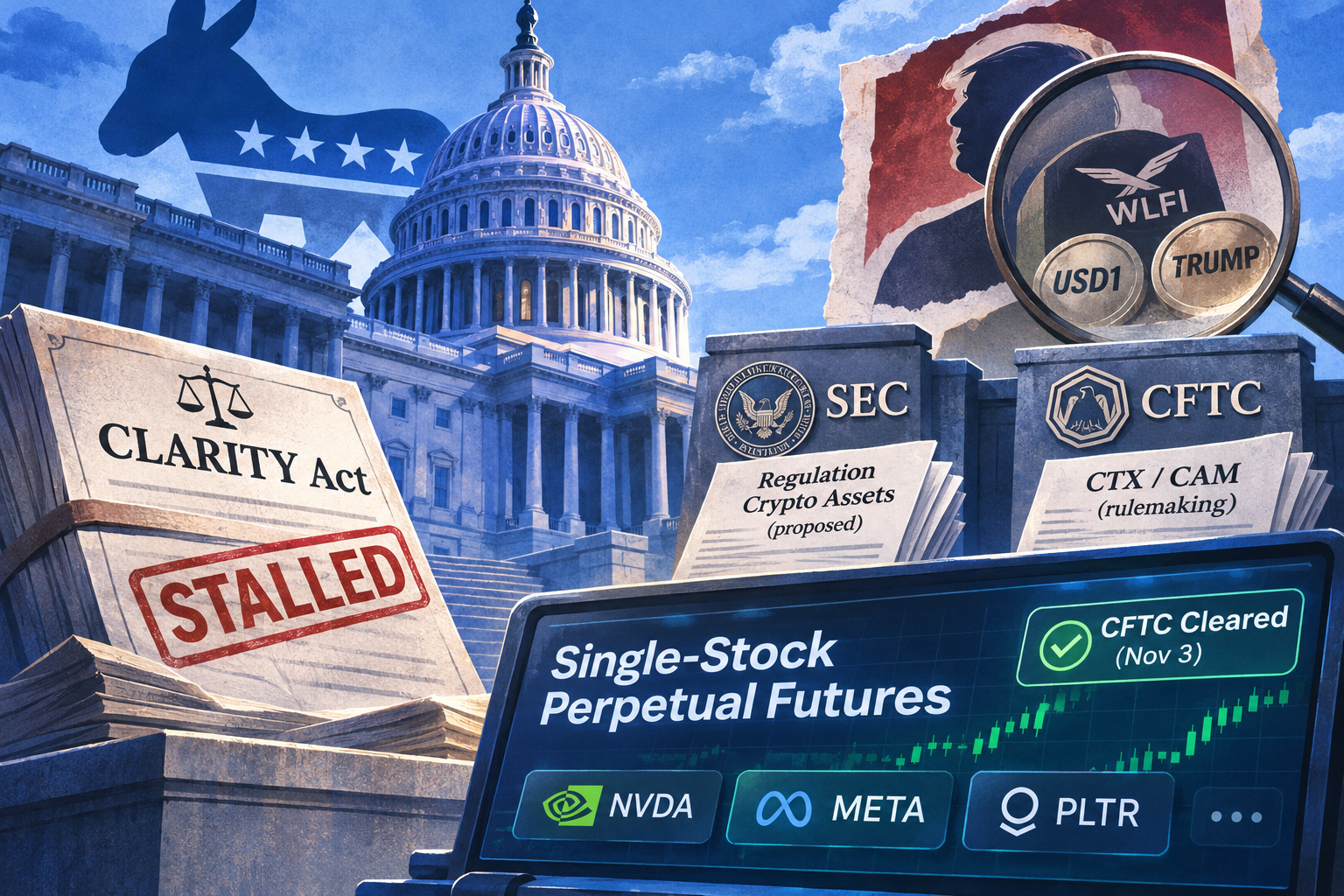
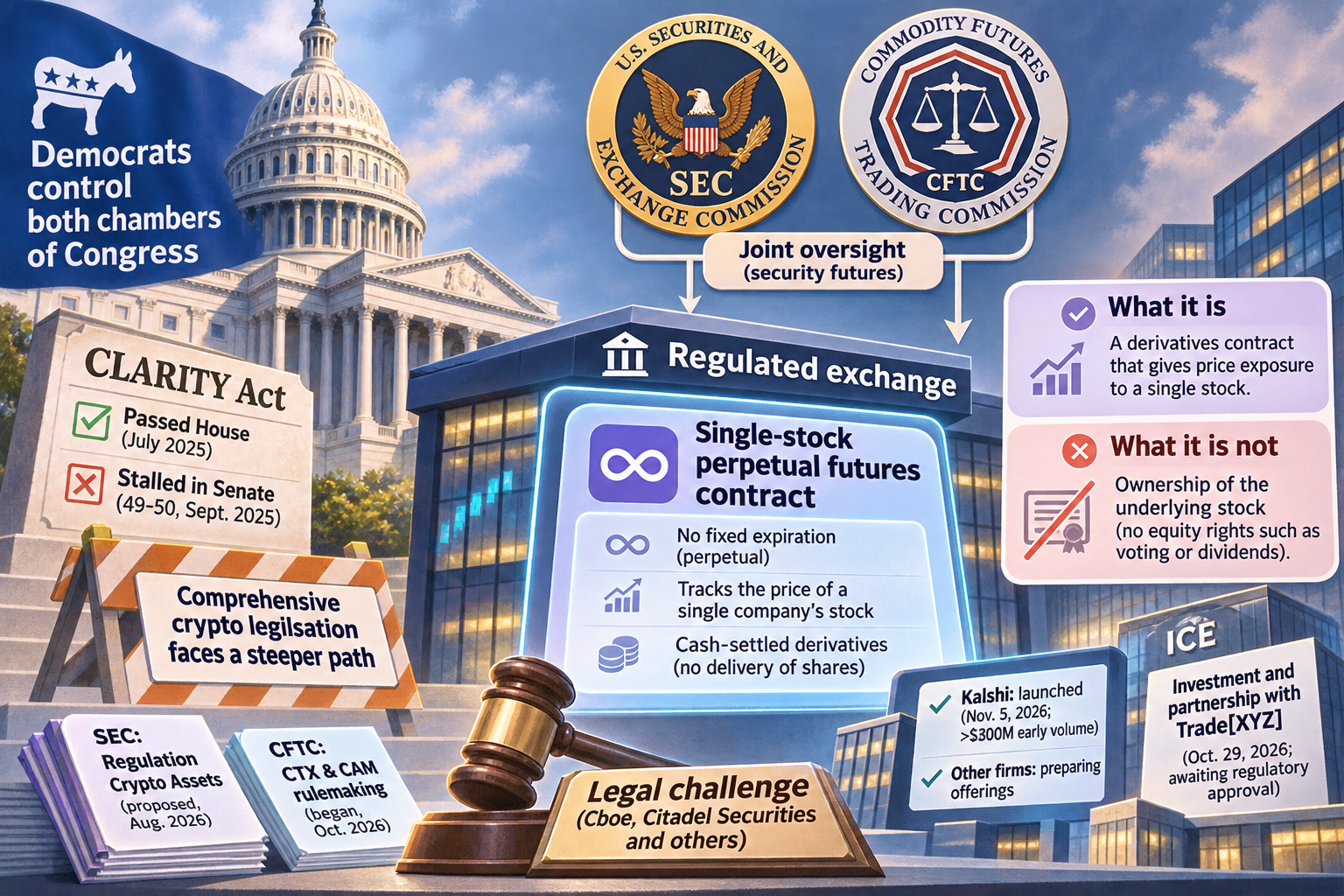
The CLARITY Act, which would establish a federal digital-asset market-structure framework and clarify the SEC’s and CFTC’s respective roles, passed the House in July 2025. It did not advance after a 49–50 procedural vote in the Senate that September. The report says negotiations had stalled over stablecoin rewards, DeFi developer liability and ethics provisions concerning government officials.
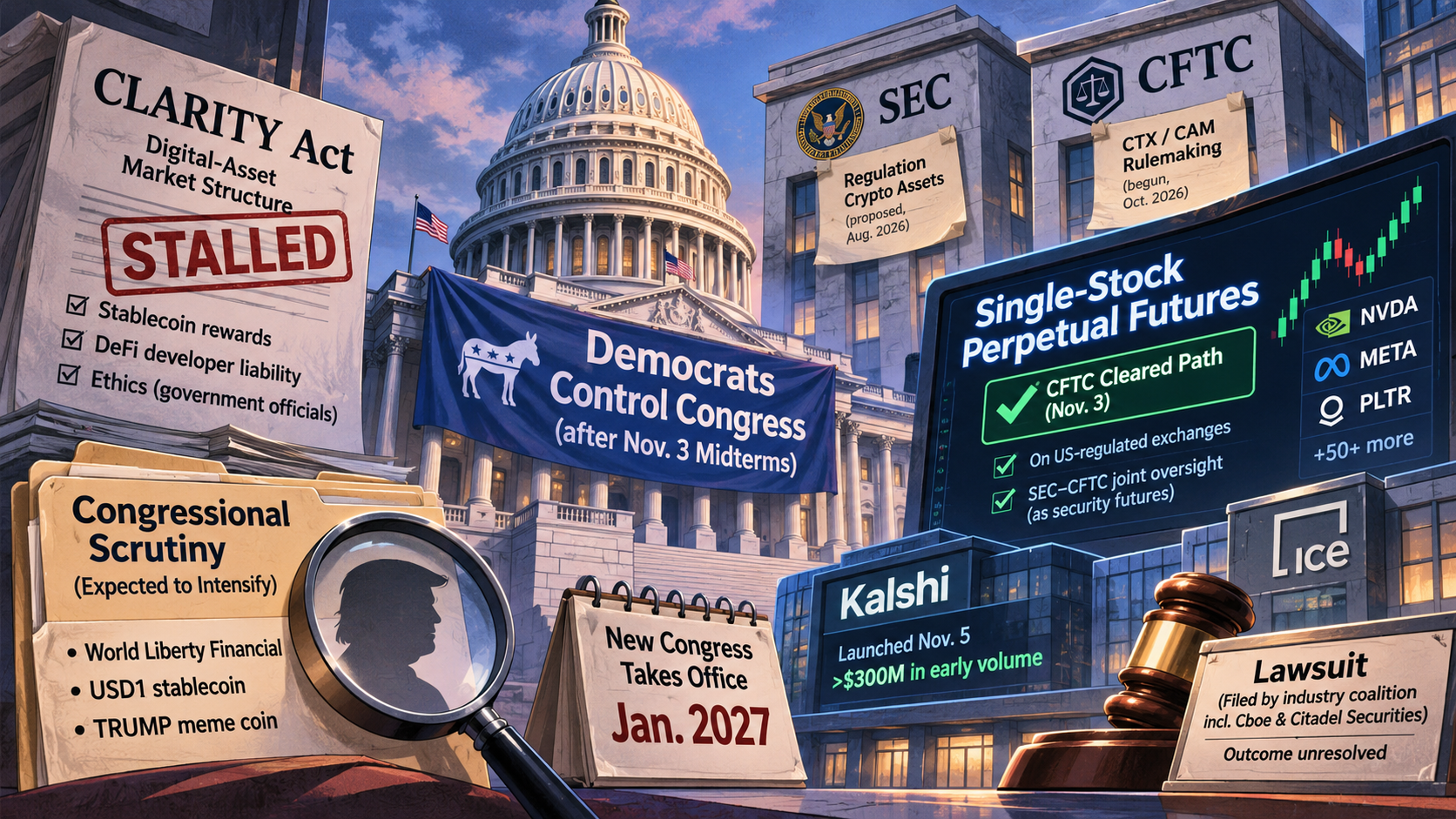
Four Pillars expects congressional scrutiny of the Trump family’s crypto businesses to intensify. It notes that several Democratic lawmakers had raised concerns about potential conflicts of interest involving World Liberty Financial, its USD1 stablecoin and the TRUMP meme coin. Those concerns are not findings that a conflict influenced policy.
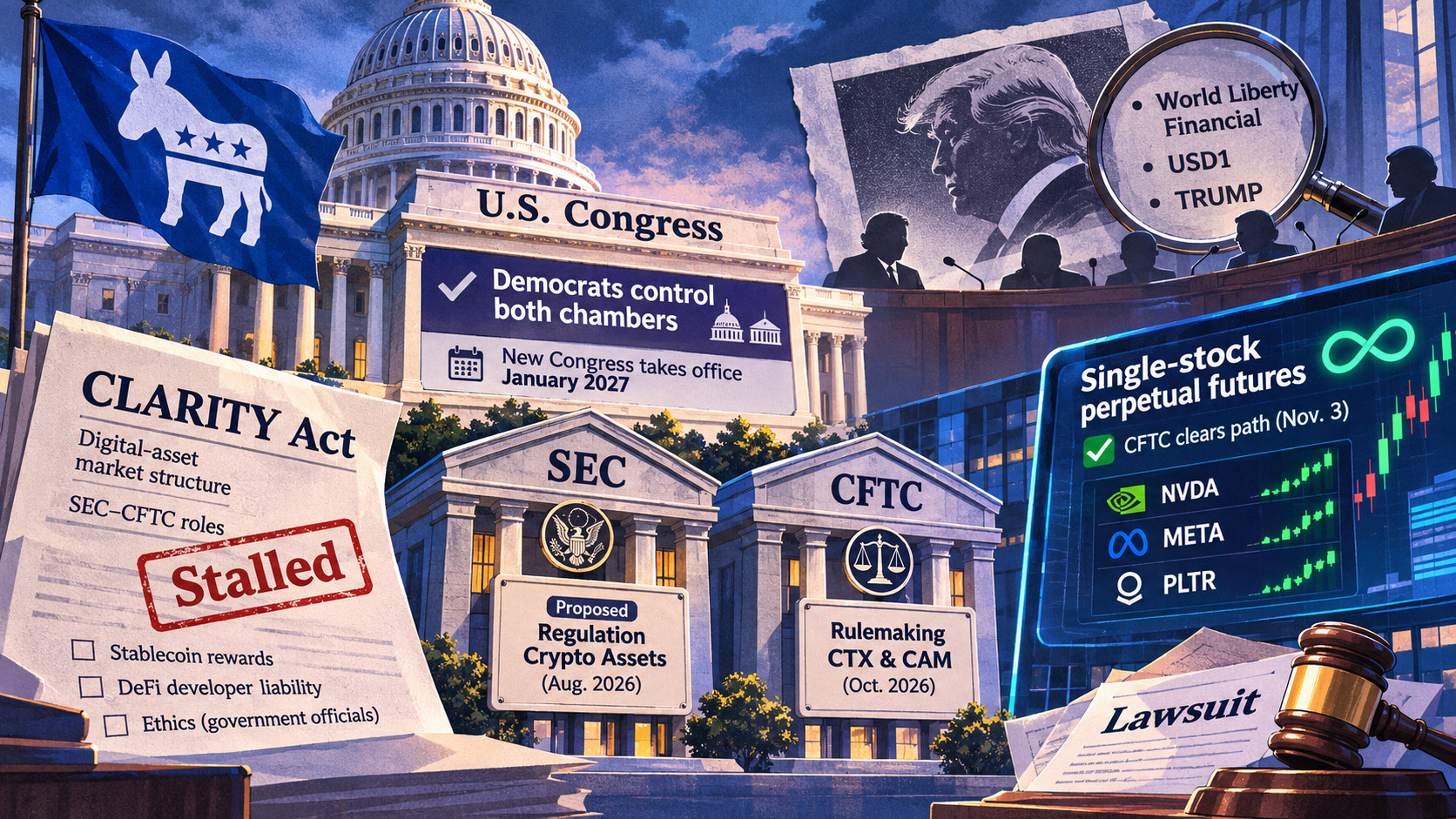
Agency action remains a separate path. The SEC proposed Regulation Crypto Assets in August 2026, including targeted registration exemptions for certain token offerings and a conditional safe harbor concerning investment-contract classification. In October, the CFTC began rulemaking on its CTX and CAM proposals for retail crypto-commodity trading. Neither initiative is described in the report as a final rule.
A new route for single-stock perpetual futures
The report says the CFTC cleared a path on November 3 for single-stock perpetual futures on US-regulated exchanges that also complete SEC registration for securities-futures trading. The contracts fall under joint SEC–CFTC oversight as security futures; the decision does not authorize decentralized platforms generally to serve US customers.
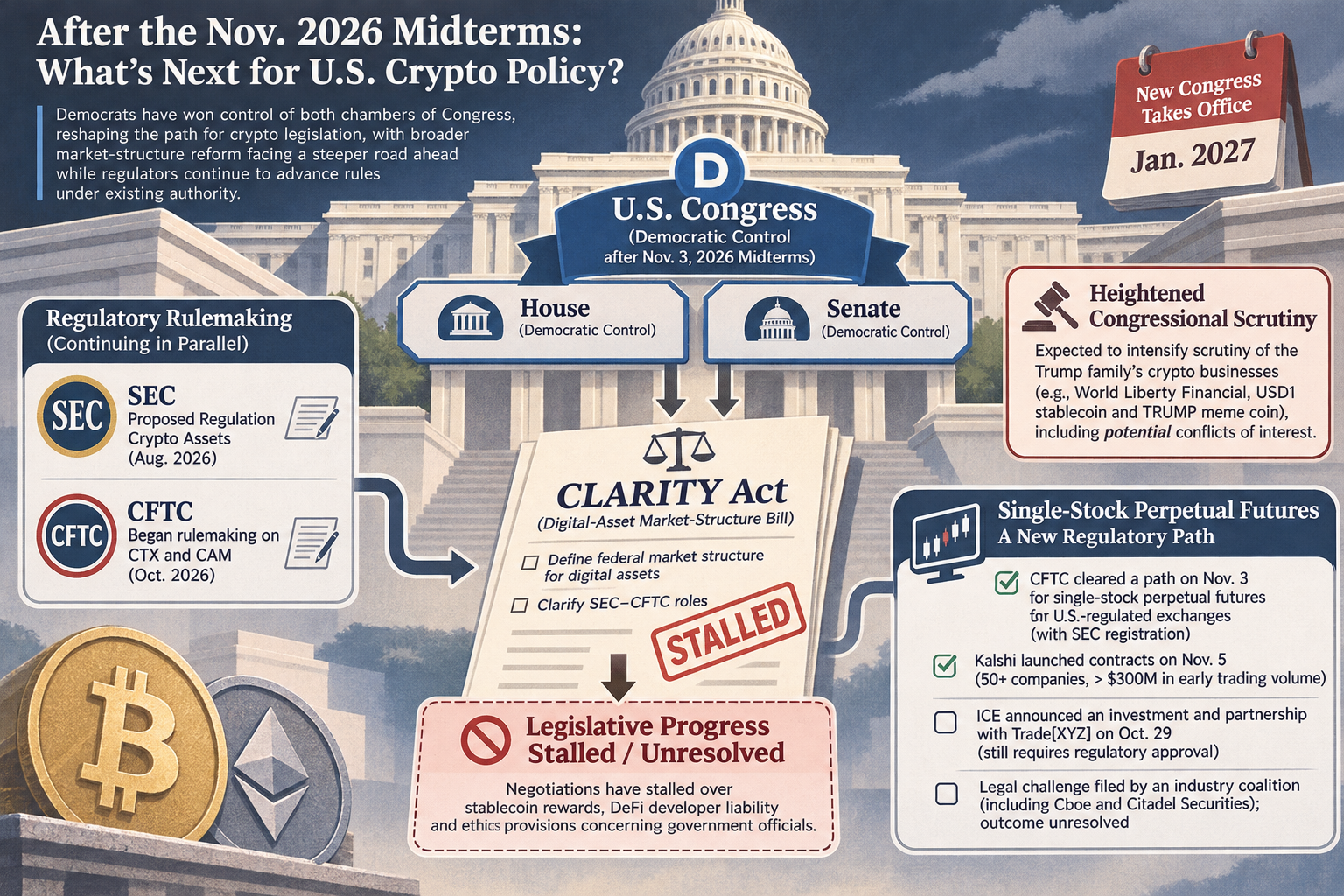
Kalshi launched contracts covering more than 50 companies on November 5 and recorded over $300 million in early trading volume, according to the report. Other firms were preparing offerings. Separately, Intercontinental Exchange announced an investment and partnership with Trade[XYZ] on October 29 to pursue regulated trading and clearing infrastructure; those plans still required regulatory approval.
The decision also faces a legal challenge. The report says an industry coalition including Cboe and Citadel Securities sued to contest the CFTC’s authority to permit single-stock perpetual contracts under the existing framework. Its outcome was unresolved at the time of the original report.
Source: techflowpost.com (originally published 2026-11-10 12:52 UTC+8)