Originally reported November 11, 2026, at 14:24 UTC+8. In an article attributed to Uniswap and translated by TechFlow, Uniswap describes a US Securities and Exchange Commission “innovation exemption” that it says took effect on September 17, 2026. This is Uniswap’s account of the measure, not an independently verified reading of the SEC order.
According to Uniswap, the exemption creates a category called a tokenized securities venue (TSV). A qualifying venue could trade tokenized US National Market System stocks through permissioned automated market maker (AMM) pools on a public blockchain. Uniswap says the exemption lasts five years and, if the order’s conditions are met, allows the venue to operate without registering as a securities exchange or alternative trading system. It says liquidity providers that comply with the conditions would not be treated as securities dealers.
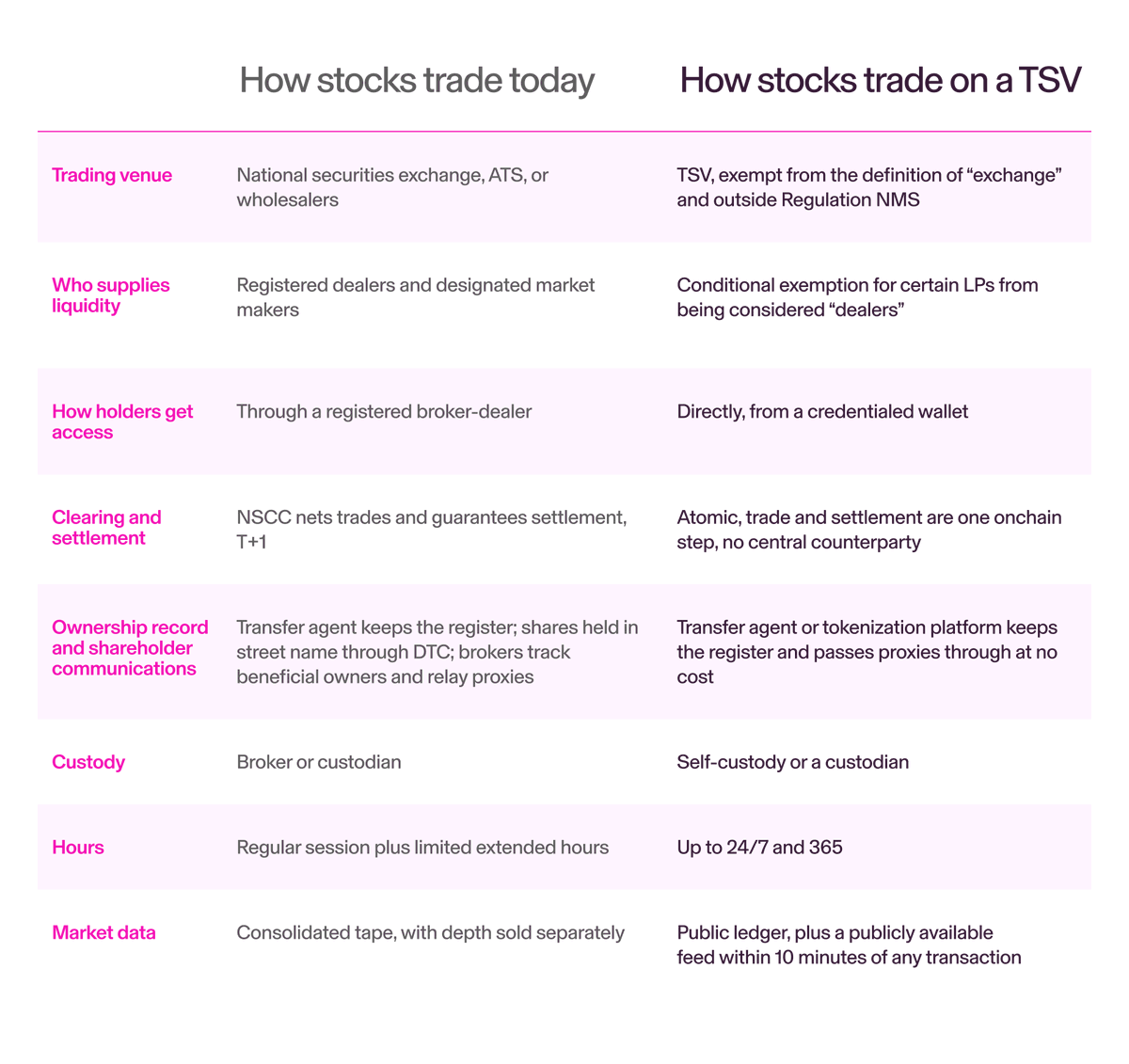
Uniswap describes limits and controls alongside that relief: public fee disclosure, access restrictions, limits on eligible securities and trading volume, and a mechanism to halt trading. It also says a TSV must give a stock issuer 30 days’ advance notice and an opportunity to object before listing its stock. The exemption is temporary, conditional and subject to change, according to the article; it is not a blanket approval for on-chain stock trading.
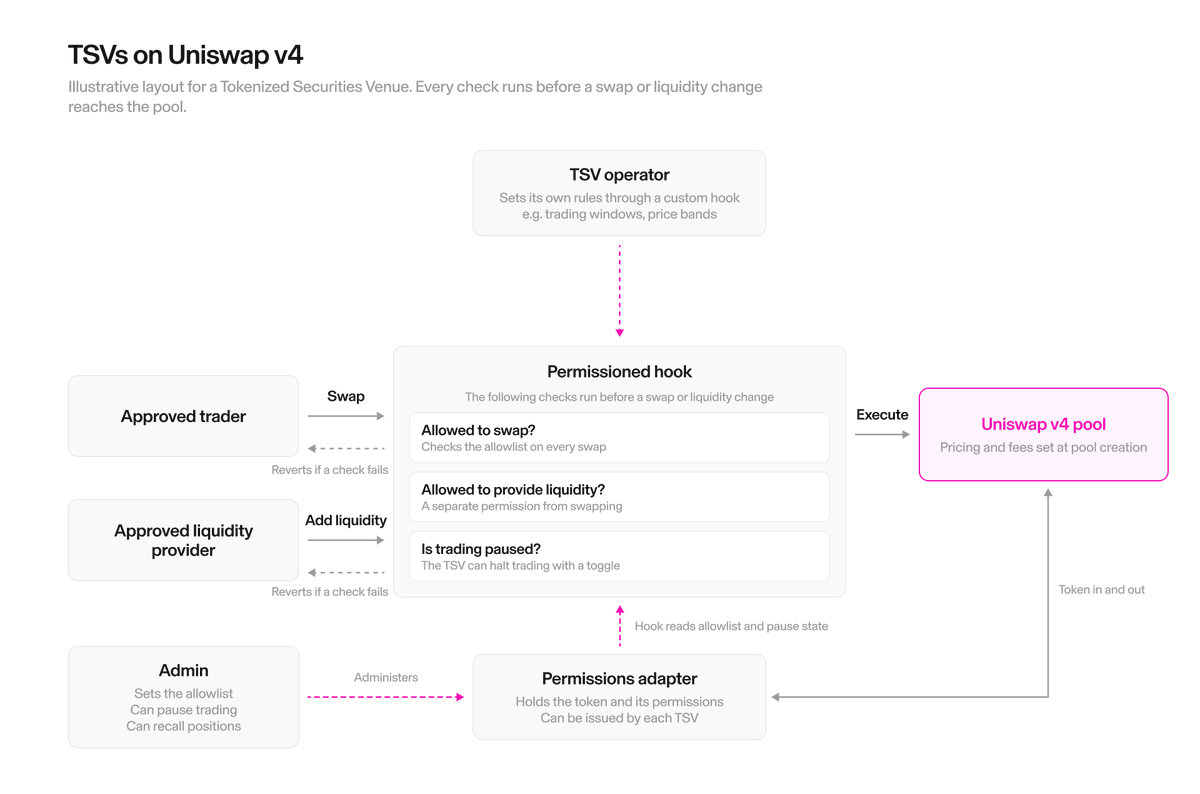
How Uniswap says a venue could work
In Uniswap’s proposed model, approved participants trade through an AMM pool, with the asset transfer and payment settling together in one blockchain transaction or neither taking place. Uniswap contrasts that with the separate execution, clearing and settlement steps in conventional securities markets. It says Uniswap v4’s programmable hooks could let a venue operator enforce access controls, trading pauses and other pool-level rules. Those design possibilities do not establish that any particular venue qualifies for the exemption.
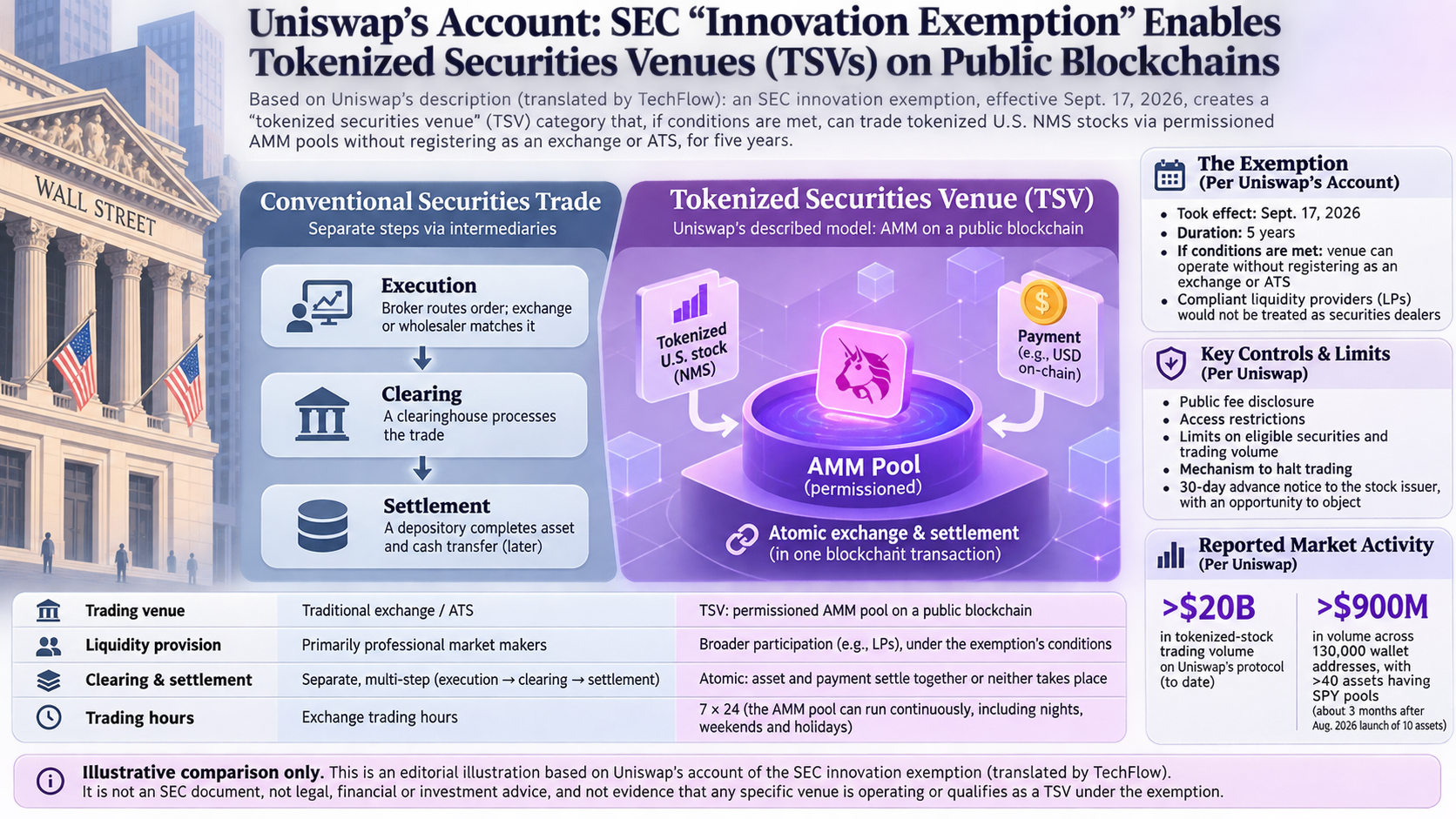
To illustrate existing activity, Uniswap says more than $20 billion in tokenized-stock trading volume has passed through its protocol, largely involving products such as Robinhood Stock Tokens and xStocks and issuers including Ondo and Dinari. It also reports that ten tokenized stocks and exchange-traded funds began trading against SPY on Robinhood Chain in August 2026; roughly three months later, it says, more than 40 assets had SPY pools, generating over $900 million in volume across 130,000 wallet addresses. These are figures reported by Uniswap, not evidence that those products operate as TSVs under the exemption.
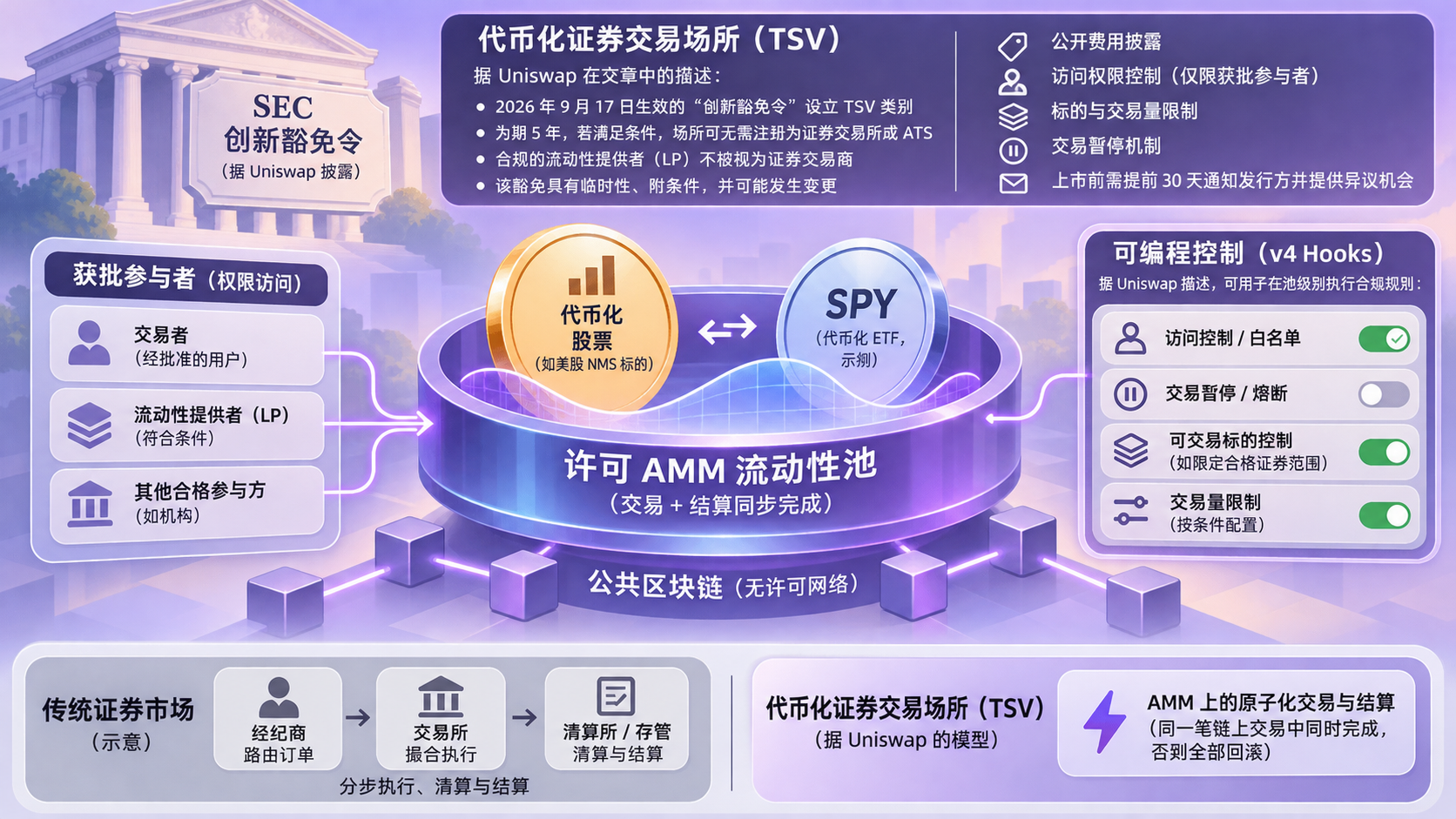
Uniswap Labs says it does not operate or control a TSV. It places responsibility for a venue’s design, legal analysis and compliance with its independent operator.
Source: techflowpost.com (originally published 2026-11-11 14:24 UTC+8)