NEAR Protocol said its House of Stake had ratified HSP-029, a proposal to lower the network’s maximum token issuance rate from 2.5% to 1.6% over 24 months. The proposal received 99.96% of votes in favor, and the Security Council did not veto it. As of November 27, 2026, the lower cap was not yet in effect.
A full-quarter grace period must pass after ratification, and validators must approve a network upgrade. Once the upgrade is implemented, the cap would decline each epoch rather than fall to 1.6% all at once.
NEAR estimates the network would issue 11.8 million fewer tokens over two years than it would under the 2.5% cap. The allocation would stay the same: 90% of issuance would go to staking participants and 10% to NEAR’s treasury. Lower issuance could limit dilution for holders, but it would also reduce gross staking rewards.
NEAR’s rebound faces resistance at $3.20–$3.30
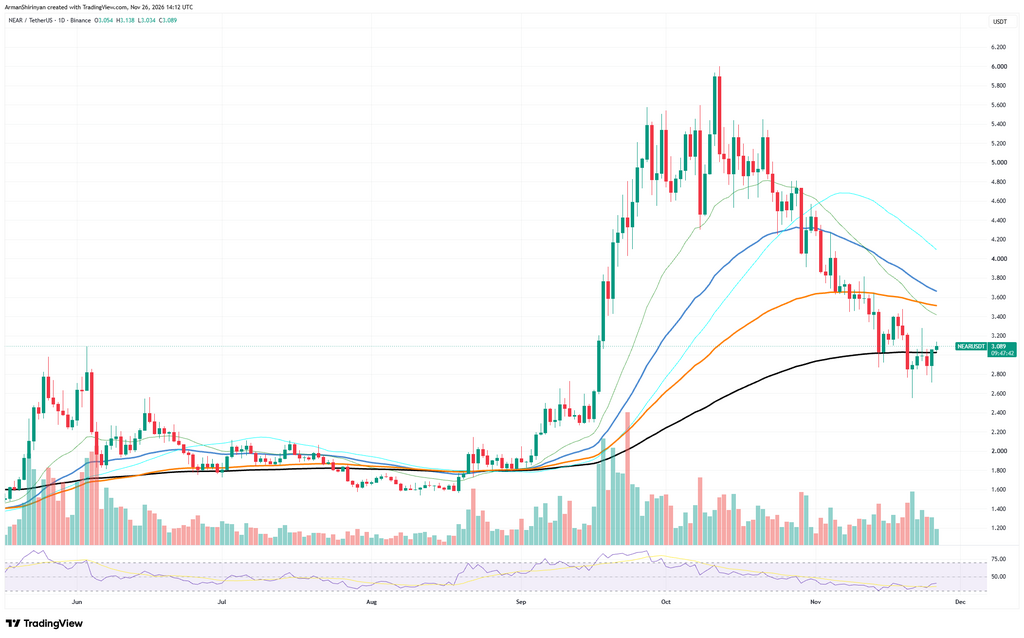
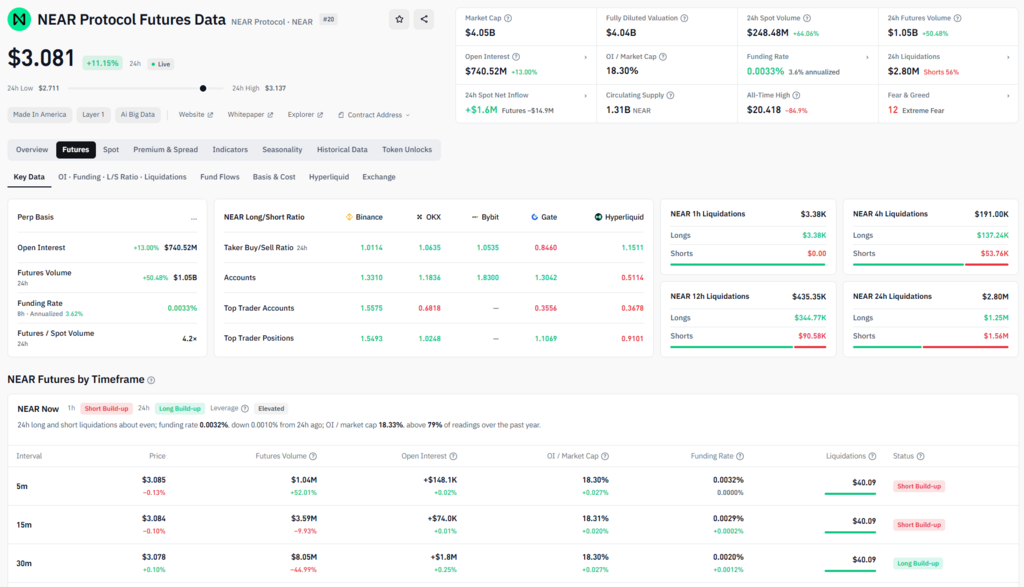
At 11:00 a.m. UTC+8 on November 27, NEAR was trading around $3.09 after rebounding from its November low near $2.60. That put it above its long-term moving average near $3.00, but well below its October high near $5.90.
The chart analysis identified $3.00–$3.10 as a potential support zone if the price could hold there. The first potential resistance was at $3.20–$3.30, followed by the shorter- and medium-term moving averages near $3.45–$3.75. Both averages were still sloping downward.
The Relative Strength Index had recovered after approaching oversold territory but remained below 50. The analysis looked for a sustained move above resistance on higher trading volume to confirm a reversal. A drop below $2.80, by contrast, could bring the November low near $2.60 back into play.