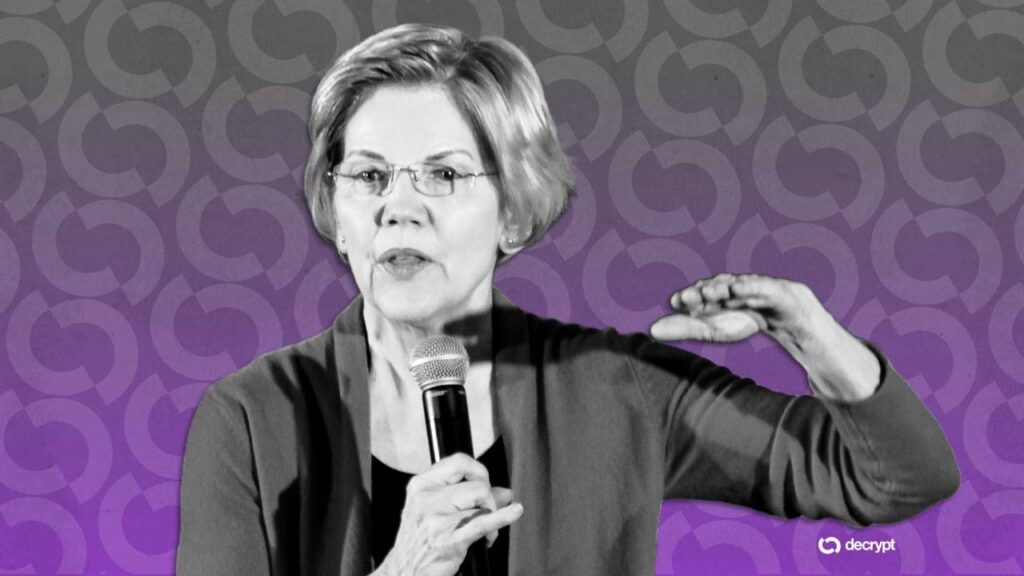
A Decrypt report published on November 10, 2026, described plans by Sen. Elizabeth Warren (D-MA), a persistent critic of the cryptocurrency industry, to use the expected chairmanship of the U.S. Senate Banking Committee for an oversight campaign directed at Trump family crypto businesses, large technology companies, and Wall Street.
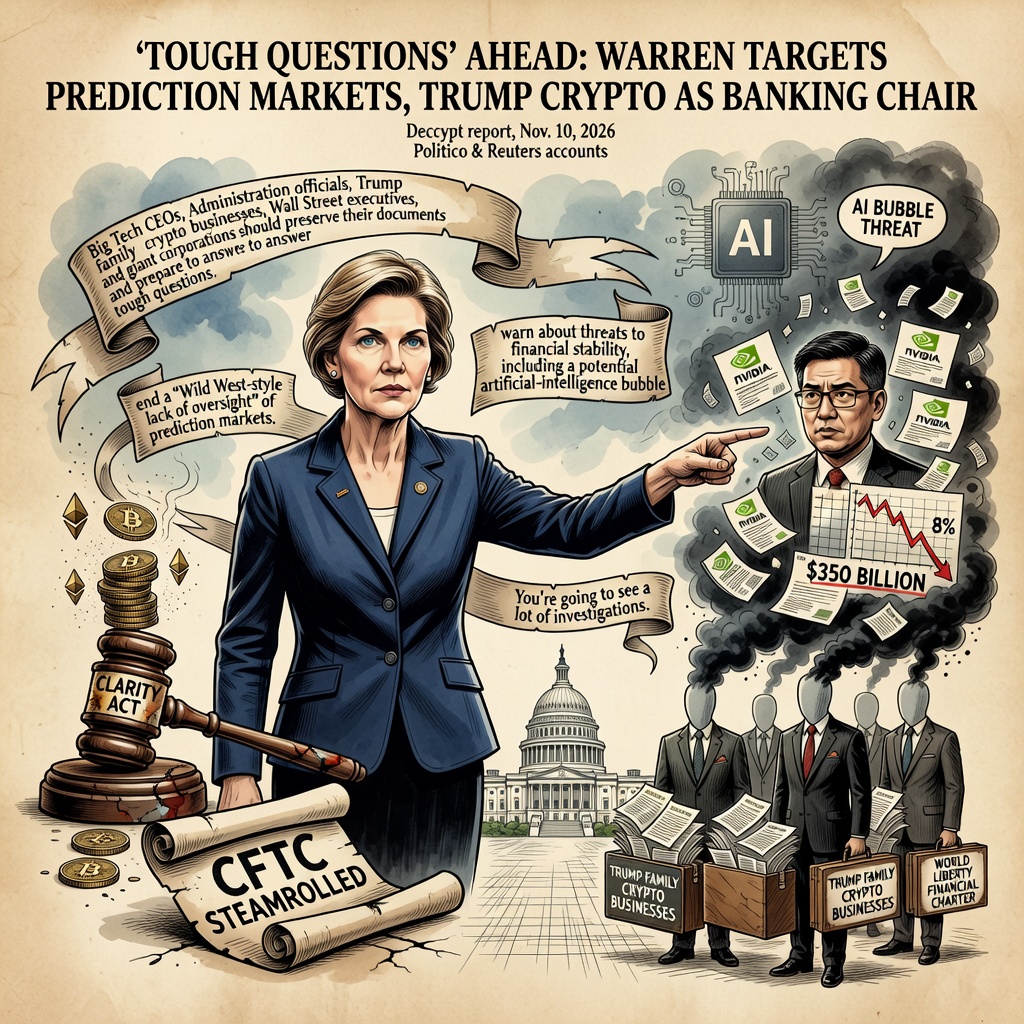
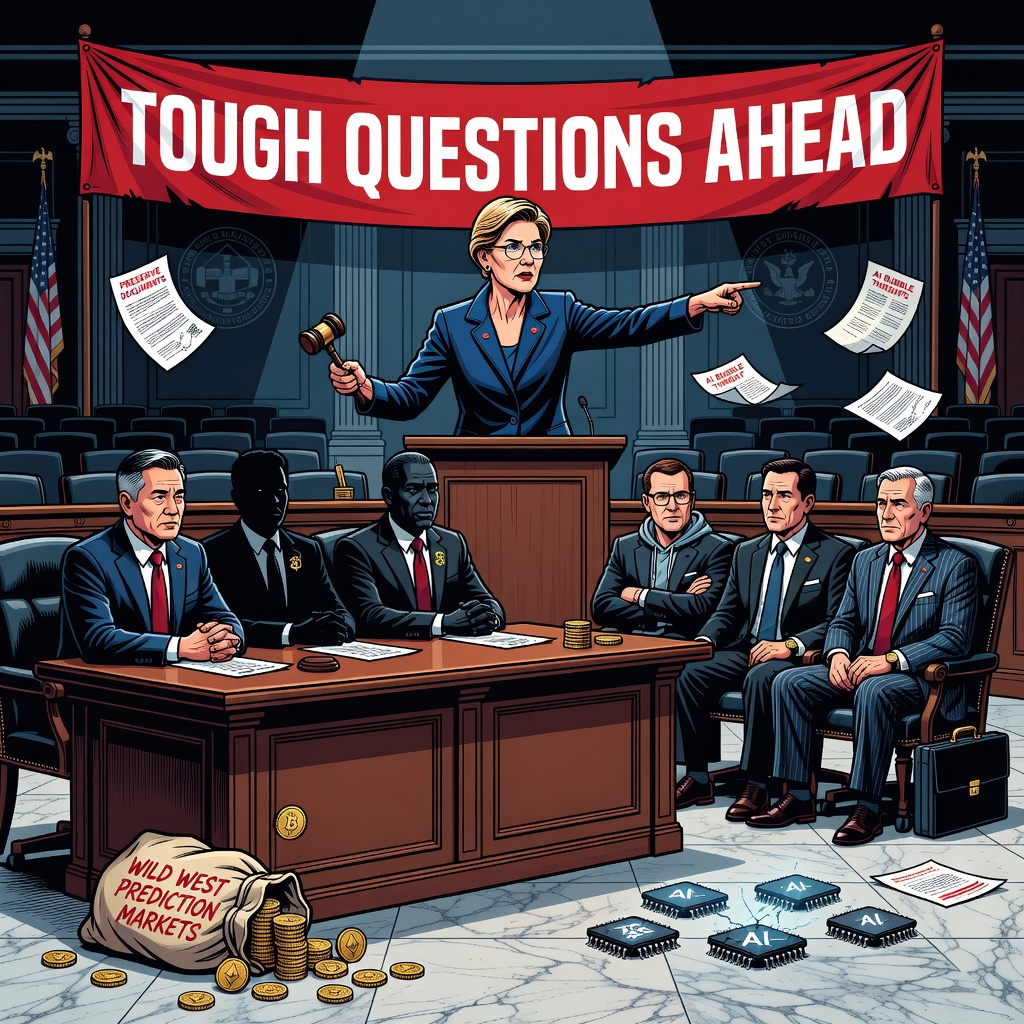
Politico reported on Monday that a Warren Banking Committee aide said: “Big Tech CEOs, Administration officials, Trump family crypto businesses, Wall Street executives, and giant corporations should preserve their documents and prepare to answer tough questions.” Warren was expected to take the chair in January after Democrats won control of the Senate in the midterm elections the previous week. The committee oversees banking, housing, cryptocurrency, and the Federal Reserve, and its chair can call hearings and open investigations.
According to the aide, Warren also wanted to end a “Wild West-style lack of oversight” of prediction markets that she said had allowed insiders to profit. She planned to warn about threats to financial stability, including a potential artificial-intelligence bubble, and to keep working with Republican lawmakers focused on China to restrict exports of advanced AI chips. Politico reported that Nvidia CEO Jensen Huang was expected to be a leading oversight target.
That account came a day after Nvidia’s board opened an independent investigation into reports that Huang had been the target of a Chinese intelligence effort, and as Nvidia shares slid as much as 8%, reducing the company’s value by roughly $350 billion.
Reuters, citing a person familiar with Warren’s thinking, reported that she was also likely to investigate the Office of the Comptroller of the Currency’s August decision to grant a conditional bank charter to Trump-backed World Liberty Financial, along with the administration’s firings of financial-agency staff and its efforts to shut down the Consumer Financial Protection Bureau. “You’re going to see a lot of investigations,” Brian Gardner, chief Washington policy strategist at Stifel, told the outlet.
In a Time essay the previous week, Warren argued that Democrats won by “being populist economic fighters,” and wrote that “Big Tech CEOs, Wall Street executives, and giant corporations should prepare to answer tough questions and face meaningful consequences if they have broken the law.”
Crypto criticism and legislative outlook
Warren has criticized both the crypto industry and the Trump family’s business interests in it. She has argued that federal regulators’ approval of national trust charters for crypto firms, including Coinbase and Ripple, is illegal, and has said the Commodity Futures Trading Commission has been “steamrolled” by the prediction-market and crypto firms it oversees. She has questioned Commerce Secretary Howard Lutnick over a Tether loan to a trust tied to his children, and joined Sen. Bernie Sanders (I-VT) in urging the Labor Department to drop plans that would make it easier to hold crypto in 401(k) retirement plans.
She was one of the leading opponents of the Clarity Act, the crypto industry’s top legislative priority, which stalled in the Senate during the year. Democrats were reported to be planning a broader crypto market-structure bill once they took control of Congress.
A White House spokesperson told Reuters that President Trump was willing to work with anyone on behalf of Americans, but that “sham investigations and radical left policies” would undermine any such effort. Republicans have cast Warren as the main obstacle to crypto legislation. Sen. Tim Scott (R-SC), the Banking chair at the time of the report, has argued that without market-structure rules, crypto is left in “the wild, wild West.”
Warren’s ability to pass legislation would remain limited while Trump is in the White House. In the Time essay she acknowledged that Trump has embraced the nickname “Mr. Veto,” while arguing that Democrats should send him bills anyway. Politico reported the previous month that she was also eyeing a more senior role in Senate Democratic leadership, potentially the No. 3 position.
These accounts describe expected hearings, investigations, and legislative plans, not rules already in effect.
Original article: Decrypt